
The Realm of Translation: From Traditional Attire to Contemporary Design
Traditional attire is not merely cultural heritage to be preserved; it also serves as a vital starting point for contemporary design. Drawing on the cross-disciplinary collaboration featured in the "Encounter: Indigenous Living National Treasures x Fashion" showcase at Taipei Fashion Week SS23, this section highlights how artisans and designers—inspired by indigenous weaving patterns, materials, silhouettes, and techniques—transform traditional cultural elements into contemporary forms through processes of deconstruction, reconfiguration, and reinterpretation, thereby demonstrating the enduring vitality and evolving potential of these crafts.
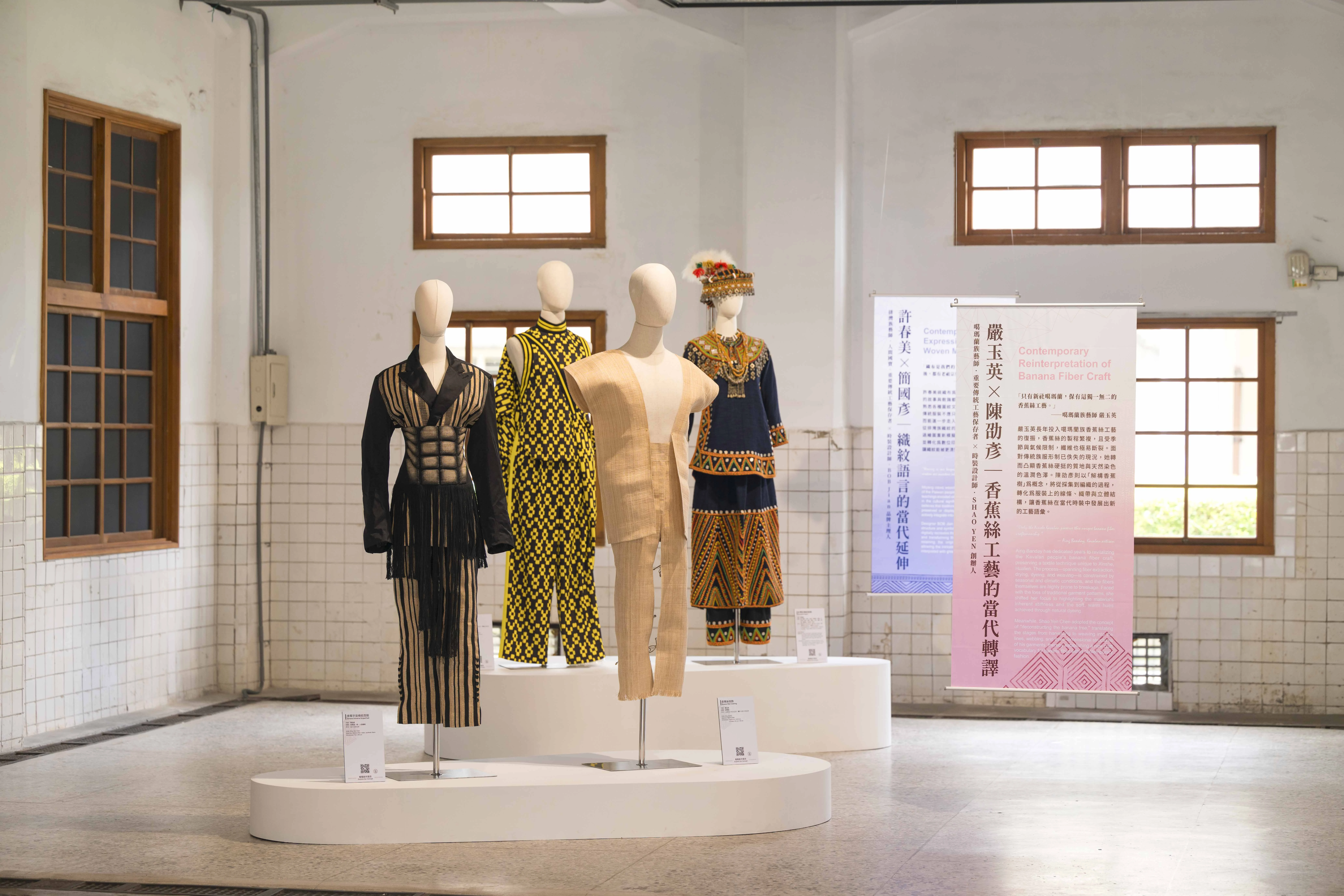
✨ 嚴玉英 Zaqong X 陳劭彥 Shao Yen Chen
噶瑪蘭族藝師 嚴玉英 × 時裝設計師 陳劭彥
嚴玉英|重要傳統工藝保存者(人間國寶)
陳劭彥|SHAO YEN 創辦人
Kavalan Artisan Zaqong × Fashion Designer Shao Yen Chen
Zaqong | Preserver of Important Traditional Arts (Living National Treasure)
Shao Yen Chen | Founder of SHAO YEN
香蕉絲工藝的當代轉譯
「只有新社噶瑪蘭,保有這獨一無二的香蕉絲工藝。」——噶瑪蘭族藝師 嚴玉英
A Contemporary Reinterpretation of Banana Fiber Craftsmanship
"Only the Xinshe Kavalan preserve this unique banana fiber craftsmanship." — Zaqong, Kavalan artisan
嚴玉英長年投入噶瑪蘭族香蕉絲工藝的復振,香蕉絲的製程繁複,且受季節與氣候限制,纖維也極易斷裂。面對傳統族服形制已佚失的現況,她轉而凸顯香蕉絲硬挺的質地與天然染色的溫潤色澤。陳劭彥則以「解構香蕉樹」為概念,將從採集到編織的過程,轉化為服裝上的線條、織帶與立體結構,讓香蕉絲在當代時裝中發展出新的工藝語彙。
Zaqong has dedicated years to revitalizing the Kavalan people's banana fiber craft, preserving a textile technique unique to Xinshe, Hualien. The process—spanning fiber extraction, drying, dyeing, and weaving—is constrained by seasonal and climatic conditions, and the fibers themselves are highly prone to breakage. Faced with the loss of traditional garment patterns, she shifted her focus to highlighting the material's inherent stiffness and the soft, warm hues achieved through natural dyeing. Meanwhile, Shao Yen Chen adopted the concept of "deconstructing the banana tree," translating the stages from harvesting to weaving into the lines, webbing, and three-dimensional structures of his garments, thereby establishing a new craft vocabulary for banana fiber within contemporary fashion.
✨ 許春美 Miyangx簡國彥 BOB Jian
排灣族藝師 許春美 × 時裝設計師 簡國彥
許春美|重要傳統工藝保存者(人間國寶)
簡國彥|BOB Jian 品牌主理人
Paiwan Artisan Miyang × Fashion Designer BOB Jian
Miyang | Preserver of Important Traditional Arts (Living National Treasure)
BOB Jian | Founder of the BOB Jian
織紋語言的當代延伸
「織布是我們的文字,每一個圖紋背後,都有老祖宗要你明白的智慧。」——排灣族藝師 許春美
許春美視織布為排灣族的文字,祖先的故事與教誨都被編寫在織紋之中。熟悉各種圖紋文化意涵的她,也相信傳統服裝不應只停留於保存與展示,而能進一步走入當代生活。簡國彥則從排灣族織紋的結構與寓意出發,透過繪圖重新模擬紋樣,再將圖紋放大並轉化為數位印花,保留原有色彩,讓織紋能被更清楚地閱讀與觀看。
The Contemporary Extension of Woven Patterns
"Weaving is our language; behind every pattern lies the wisdom our ancestors intended for us to understand." — Miyang, Paiwan artisan
Miyang views weaving as the written language of the Paiwan people, with ancestral stories and teachings encoded within the patterns. Well-versed in the cultural significance of these motifs, she believes that traditional attire should not merely be preserved or displayed as artifacts but should actively integrate into contemporary life. Designer BOB Jian draws inspiration from the structure and symbolism of Paiwan weaves; he digitally recreates the patterns—scaling them up and transforming them into digital prints while retaining the original color palette—thereby allowing the intricate designs to be viewed and interpreted with greater clarity.